
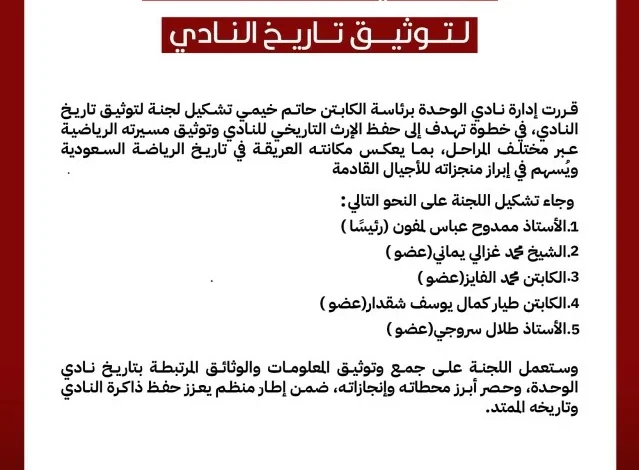
أعلن نادي الوحدة تشكيل لجنة خاصة لتوثيق تاريخ النادي وبطولاته وجمع أرشيفه الرياضي، في خطوة قال النادي إنها تهدف إلى حفظ الإرث التاريخي للنادي وإبراز مسيرته في تاريخ الرياضة السعودية عبر توثيق الوثائق والإنجازات والمحطات التي مر بها منذ تأسيسه.
وبحسب الإعلان، تشكلت اللجنة برئاسة الأستاذ ممدوح عباس لفون، وعضوية الشيخ محمد غزالي يماني، والكاتب محمد الفايز، والكابتن طيار كمال يوسف شنفدار، إضافة إلى الأستاذ طلال سروجـي، حيث ستتولى اللجنة جمع الوثائق والأرشيفات الرياضية والصحفية المرتبطة بتاريخ النادي، والعمل على تنظيمها وإعداد سجل توثيقي يعكس مسيرة النادي عبر العقود.
وتسعى اللجنة، وفق ما أُعلن، إلى مراجعة المصادر التاريخية والأرشيفات المرتبطة بتاريخ النادي، إضافة إلى الاستفادة من الشهادات والروايات التاريخية المرتبطة بمسيرته، بهدف تقديم مادة توثيقية منظمة تحفظ ذاكرة النادي وتاريخه في المشهد الرياضي السعودي.
غير أن الإعلان أعاد طرح تساؤل في الوسط الرياضي: هل تعيد هذه الخطوة فتح أحد أكثر الملفات جدلاً في تاريخ كرة القدم السعودية؟
فملف توثيق تاريخ الأندية ظل محل نقاش واسع لسنوات، قبل أن يعلن الاتحاد السعودي لكرة القدم في الفترة الماضية نتائج مشروع توثيق تاريخ كرة القدم السعودية، وهو المشروع الذي استهدف حصر بطولات الأندية وتوثيق تاريخها وفق منهجية علمية موحدة.
لكن تشكيل لجنة التوثيق في نادي الوحدة أعاد النقاش إلى زاوية مختلفة، خصوصاً أن بعض الأسماء التي ضمتها اللجنة تُعرف باهتمامها بتاريخ النادي، ومن بينها من يرى أن نادي الوحدة هو أول نادٍ تأسس في المملكة العربية السعودية، وأنه الأحق بلقب «عميد الأندية السعودية».
وهنا يبرز السؤال الذي يتردد في الوسط الرياضي: هل تمثل هذه اللجنة مجرد خطوة لحفظ التاريخ الوحداوي، أم أنها تمهّد لإعادة طرح الرواية التاريخية التي تقول بأسبقية الوحدة في تأسيس الأندية السعودية؟
ففي حال انتهت اللجنة إلى تبنّي هذا الطرح وإعلانه بوثائق جديدة، فإن ذلك قد يعيد فتح الجدل القديم حول لقب «العميد» وأسبقية تأسيس الأندية، وهو أحد أكثر الملفات حساسية في النادي.
وبين التوثيق والجدل، يبقى السؤال مفتوحاً في الوسط الرياضي: هل هي خطوة أرشيفية داخلية… أم بداية فصل جديد من الجدل التاريخي حول «أول الأندية السعودية»؟
The Al-Wehda Club announced the formation of a special committee to document the club’s history and championships and to collect its sports archive, in a step the club said aims to preserve the historical legacy of the club and highlight its journey in the history of Saudi sports by documenting the documents, achievements, and milestones it has gone through since its establishment.
According to the announcement, the committee is chaired by Mr. Mamdouh Abbas Lufon, with the membership of Sheikh Mohammed Ghazali Yamani, writer Mohammed Al-Faiz, Captain Pilot Kamal Youssef Shanfidar, in addition to Mr. Talal Sarouji. The committee will be responsible for collecting documents and sports and journalistic archives related to the club’s history, organizing them, and preparing a documentation record that reflects the club’s journey over the decades.
The committee aims, as announced, to review historical sources and archives related to the club’s history, in addition to benefiting from testimonies and historical narratives related to its journey, with the goal of providing an organized documentation material that preserves the club’s memory and history in the Saudi sports scene.
However, the announcement has raised a question in the sports community: Does this step reopen one of the most controversial files in the history of Saudi football?
The file of documenting the history of clubs has been widely discussed for years, before the Saudi Football Federation recently announced the results of the project to document the history of Saudi football, which aimed to catalog the championships of clubs and document their history according to a unified scientific methodology.
But the formation of the documentation committee at Al-Wehda Club has brought the discussion back to a different angle, especially since some of the names included in the committee are known for their interest in the club’s history, including those who believe that Al-Wehda is the first club established in the Kingdom of Saudi Arabia and that it deserves the title of “Dean of Saudi Clubs.”
Here arises the question that resonates in the sports community: Does this committee represent just a step to preserve the history of Al-Wehda, or does it pave the way for reintroducing the historical narrative that claims Al-Wehda’s precedence in the establishment of Saudi clubs?
If the committee concludes by adopting this narrative and announcing it with new documents, it could reopen the old debate regarding the title of “Dean” and the precedence of club establishment, which is one of the most sensitive files in the club.
Between documentation and debate, the question remains open in the sports community: Is it an internal archival step… or the beginning of a new chapter in the historical debate about “the first Saudi clubs”?